


x





Oceans of the World Zone
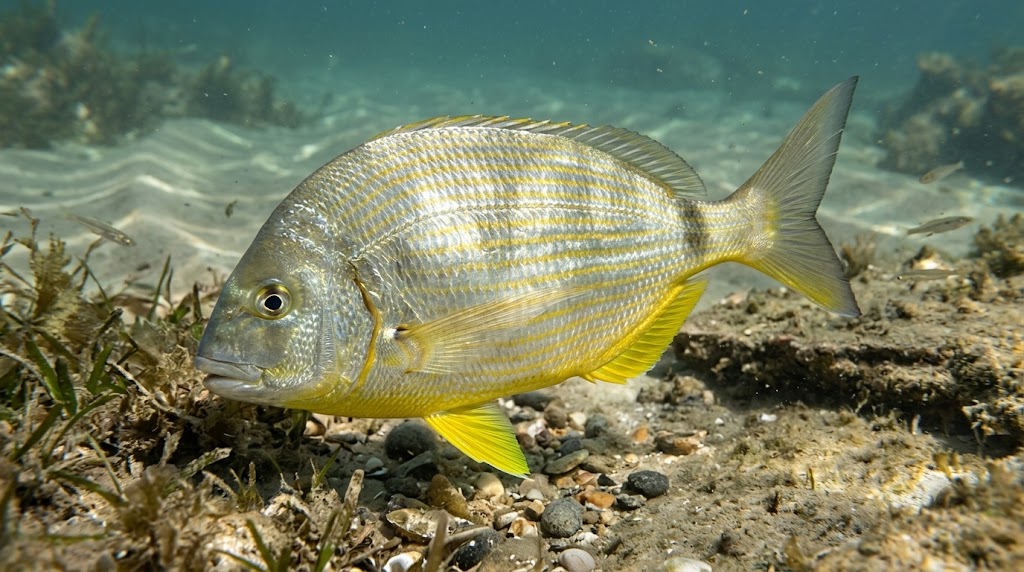
NAME : Goldlined Seabream / Goldlined Sparid
NAME OF THE SPECIE: Goldlined Seabream / Goldlined Sparid
LOCATION : Tropical and subtropical marine waters of the Indian Ocean and western Pacific Ocean.
HABITAT: Coastal waters, bays, mangroves, seagrass beds, coral reefs, and rocky areas.
HABITAT (15-20 words): This fish commonly inhabits shallow coastal waters, bays, mangrove areas, seagrass beds, and coral reef environments.
WEIGHT: Usually reaches around 30–40 cm in length, although larger individuals can grow considerably bigger.
DIET: Small crustaceans, molluscs, worms, small fish, algae, and other small aquatic organisms.
FOOD: Small crustaceans, molluscs, worms, small fish, algae, and other small aquatic organisms.
FOOD & DIET: It forages around the seabed and rocky areas, feeding on molluscs, crustaceans, worms, algae, and small organisms.
FACT: Its silvery body and distinctive golden lateral line are characteristic features that help identify the species.
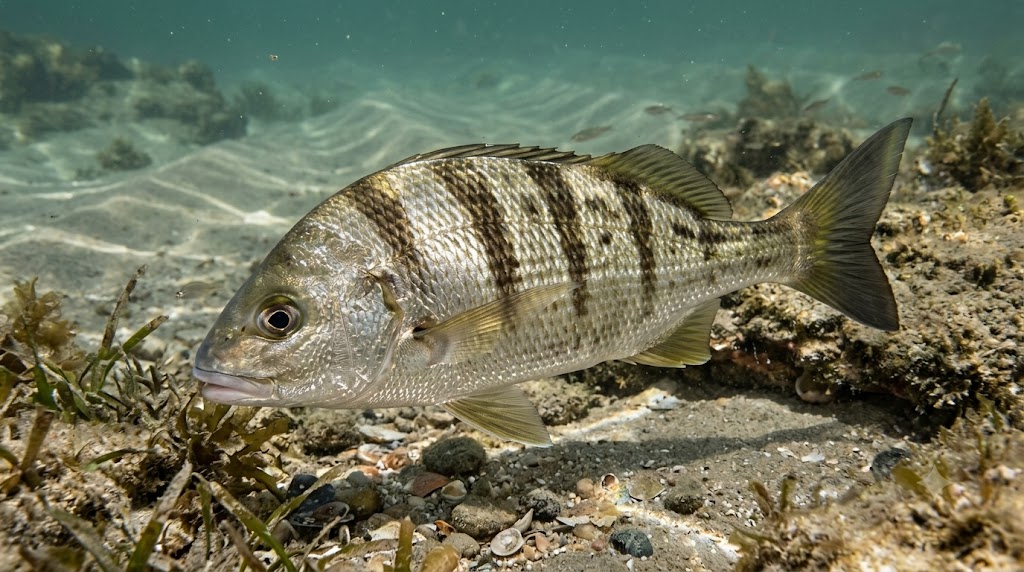
NAME : Forktail Grunter
NAME OF THE SPECIE: Forktail Grunter
LOCATION : Tropical marine waters of the Indian Ocean and western Pacific Ocean.
HABITAT: Shallow coastal waters, bays, mangrove areas, sandy and muddy seabeds, and areas around coral reefs.
HABITAT (15-20 words): This fish inhabits shallow coastal waters, bays, mangroves, and sandy or muddy seabeds in tropical marine environments.
WEIGHT: Usually grows to around 20–30 cm in length, although larger individuals may grow considerably bigger.
DIET: Small crustaceans, shrimp, crabs, molluscs, worms, and other small bottom-dwelling organisms.
FOOD: Small crustaceans, shrimp, crabs, molluscs, worms, and other small bottom-dwelling organisms.
FOOD & DIET: It forages along the seabed, feeding on shrimp, crabs, molluscs, worms, and other small aquatic organisms.
FACT: Its body markings and spiny dorsal fin are useful features for distinguishing it from other grunter species.
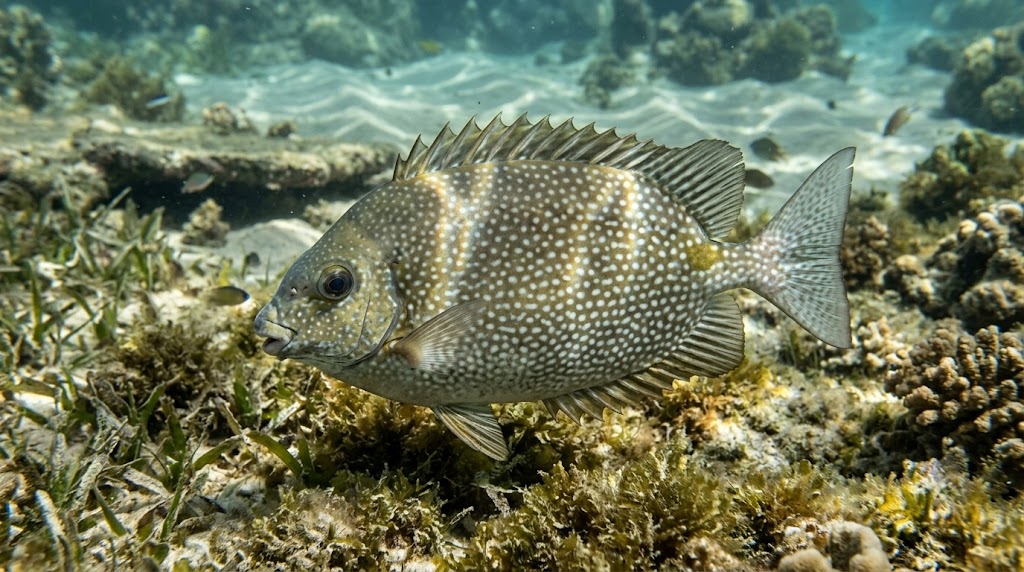
NAME : Mottled Spinefoot
NAME OF THE SPECIE: Mottled Spinefoot
LOCATION : Tropical and subtropical marine waters of the Indian and Pacific Oceans.
HABITAT: Shallow coastal waters, coral reefs, seagrass beds, rocky areas, and areas around mangroves.
HABITAT (15-20 words): This fish commonly inhabits shallow marine waters around seagrass beds, coral reefs, rocky areas, and coastal habitats.
WEIGHT: Usually grows to around 20–30 cm in length, with larger individuals reaching approximately 40 cm.
DIET: Primarily algae and other marine plant matter, along with occasional small aquatic organisms.
FOOD: Primarily algae and other marine plant matter, along with occasional small aquatic organisms.
FOOD & DIET: It mainly feeds on algae and marine vegetation, occasionally consuming small aquatic organisms found in its habitat.
FACT: Its dorsal and pelvic fins contain sharp spines that can provide protection against potential predators.
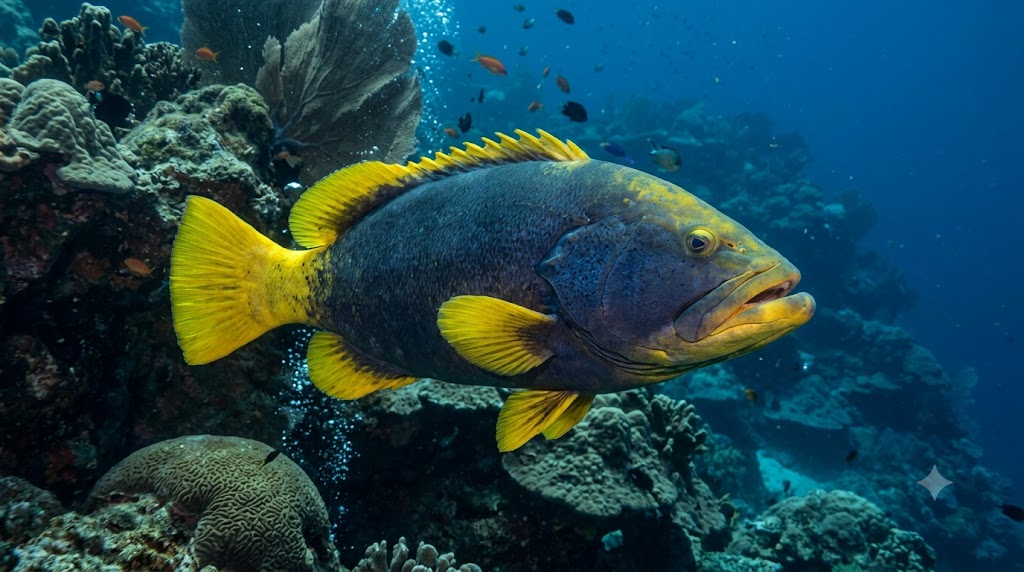
NAME : Blue-and-Yellow Grouper
NAME OF THE SPECIE: Blue-and-Yellow Grouper
LOCATION : Indian Ocean, particularly tropical waters of the western Indian Ocean.
HABITAT: Coral reefs, rocky seabeds, caves, reef slopes, and other structured reef environments.
HABITAT (15-20 words): This grouper generally inhabits coral reefs, rocky seabeds, caves, and reef slopes in tropical marine waters.
WEIGHT: Usually grows around 30–50 cm in length, with larger individuals reaching approximately 60 cm.
DIET: Small fish, shrimp, crabs, squid, and other small marine organisms.
FOOD: Small fish, shrimp, crabs, squid, and other small marine organisms.
FOOD & DIET: It mainly preys on small fish, shrimp, crabs, squid, and other small marine organisms found around reefs.
FACT: Its striking yellow and blue coloration makes it a distinctive and easily recognizable grouper species.
વૈજ્ઞાનિક નામ : Rhabdosargus sarba
જાતિનું નામ: સિલ્વર બ્રીમ / ડ્રીપ-નોઝ પોર્ગી
સ્થાન: હિંદ મહાસાગર અને પશ્ચિમ પ્રશાંત મહાસાગરના ઉષ્ણકટિબંધીય અને ઉપઉષ્ણકટિબંધીય દરિયાઈ વિસ્તારો.
લંબાઈ અને વજન: લંબાઈ સામાન્ય રીતે આશરે 30–40 સેમી સુધી હોય છે; મોટા વ્યક્તિઓ વધુ મોટા થઈ શકે છે.
ખોરાક: નાના ક્રસ્ટેશિયન, મોલસ્ક, કૃમિઓ, નાની માછલીઓ, શેવાળ અને અન્ય નાના જળચર જીવો.
ખોરાક (વૈકલ્પિક) આહાર : તે તળિયે અને ખડકાળ વિસ્તારોમાં ખોરાક શોધીને મોલસ્ક, ક્રસ્ટેશિયન, કૃમિઓ અને શેવાળ ખાય છે.
વિશેષતા: તેના શરીર પર ચાંદી જેવો રંગ અને ઊભી કાળી પટ્ટીઓ તેની વિશિષ્ટ ઓળખ છે.
વૈજ્ઞાનિક નામ : Pomadasys furcatus
જાતિનું નામ: ફોર્કટેઇલ ગ્રન્ટર
સ્થાન: હિંદ મહાસાગર અને પશ્ચિમ પ્રશાંત મહાસાગરના ઉષ્ણકટિબંધીય દરિયાઈ વિસ્તારો.
લંબાઈ અને વજન: સામાન્ય રીતે આશરે 20–30 સેમી લાંબી હોય છે; મોટા વ્યક્તિઓ વધુ લાંબા થઈ શકે છે.
ખોરાક: નાના ક્રસ્ટેશિયન, ઝીંગા, કરચલા, મોલસ્ક, કૃમિઓ અને અન્ય નાના તળિયે રહેતા જીવો.
ખોરાક (વૈકલ્પિક) આહાર : તે સમુદ્રતળમાં ખોરાક શોધીને ઝીંગા, કરચલા, મોલસ્ક, કૃમિઓ અને અન્ય નાના જળચર જીવો ખાય છે.
વિશેષતા: તેના શરીર પરની પટ્ટીઓ અને કાંટાવાળી પીઠની પાંખ તેને અન્ય ગ્રન્ટર માછલીઓથી ઓળખવામાં મદદ કરે છે.
વૈજ્ઞાનિક નામ : Siganus fuscescens
જાતિનું નામ: મોટલ્ડ સ્પાઇનલૂટ
સ્થાન: હિંદ અને પ્રશાંત મહાસાગરના ઉષ્ણકટિબંધીય તથા ઉપઉષ્ણકટિબંધીય દરિયાઈ વિસ્તારો.
લંબાઈ અને વજન: સામાન્ય રીતે આશરે 20–30 સેમી લાંબી હોય છે; મોટા વ્યક્તિઓ લગભગ 40 સેમી સુધી પહોંચી શકે છે.
ખોરાક: મુખ્યત્વે શેવાળ અને અન્ય વનસ્પતિજન્ય દરિયાઈ ખોરાક, તેમજ નાના જળચર જીવો.
ખોરાક (વૈકલ્પિક) આહાર : તે મુખ્યત્વે શેવાળ અને દરિયાઈ વનસ્પતિ ખાય છે અને ક્યારેક નાના જળચર જીવો પણ ખાય છે.
વિશેષતા: તેના પીઠ અને પેટની પાંખોમાં તીક્ષ્ણ કાંટા હોય છે, જે સંરક્ષણ માટે ઉપયોગી છે.
વૈજ્ઞાનિક નામ : Epinephelus flavocaeruleus
જાતિનું નામ: યલો-બ્લુ ગ્રૂપર
સ્થાન: હિંદ મહાસાગર, ખાસ કરીને પશ્ચિમ હિંદ મહાસાગરના ઉષ્ણકટિબંધીય દરિયાઈ વિસ્તારો.
લંબાઈ અને વજન: લંબાઈ સામાન્ય રીતે 30–50 સેમી સુધી હોય છે; મોટા વ્યક્તિઓ આશરે 60 સેમી સુધી પહોંચી શકે છે.
ખોરાક: નાની માછલીઓ, ઝીંગા, કરચલા, સ્ક્વિડ અને અન્ય નાના દરિયાઈ જીવો.
ખોરાક (વૈકલ્પિક) આહાર : તે મુખ્યત્વે નાની માછલીઓ, ઝીંગા, કરચલા અને અન્ય નાના દરિયાઈ જીવોનો શિકાર કરીને ખાય છે.
વિશેષતા: તેના શરીરનો પીળો અને વાદળી રંગ તેને ખૂબ જ આકર્ષક અને સરળતાથી ઓળખી શકાય તેવી પ્રજાતિ બનાવે છે.
वैज्ञानिक नाम : Rhabdosargus sarba
जाति का नाम : गोल्डलाइन सीब्रीम / गोल्डलाइन स्पैरिड
जगह: हिंद महासागर और पश्चिमी प्रशांत महासागर के उष्णकटिबंधीय और उपोष्णकटिबंधीय समुद्री क्षेत्र।
लंबाई और वजन: इसकी लंबाई सामान्यतः लगभग 30–40 सेमी तक होती है, जबकि कुछ बड़े जीव इससे अधिक लंबे हो सकते हैं।
खाना: छोटे क्रस्टेशियन, मोलस्क, कीड़े, छोटी मछलियाँ, शैवाल और अन्य छोटे जलीय जीव।
भोजन (वैकल्पिक) आहार: यह समुद्र की तलहटी और चट्टानी क्षेत्रों में मोलस्क, क्रस्टेशियन, कीड़े, शैवाल और छोटे जीव खोजकर खाती है।
विशेषता: इसके चांदी जैसे शरीर और शरीर के किनारे दिखाई देने वाली सुनहरी रेखा इसकी प्रमुख पहचान हैं।
वैज्ञानिक नाम : Pomadasys furcatus
जाति का नाम : फोर्कटेल ग्रंटर
जगह: हिंद महासागर और पश्चिमी प्रशांत महासागर के उष्णकटिबंधीय समुद्री क्षेत्र।
लंबाई और वजन: इसकी लंबाई सामान्यतः लगभग 20–30 सेमी तक होती है, जबकि कुछ बड़े जीव इससे अधिक लंबे हो सकते हैं।
खाना: छोटे क्रस्टेशियन, झींगे, केकड़े, मोलस्क, कीड़े और समुद्र की तलहटी में रहने वाले अन्य छोटे जीव।
भोजन (वैकल्पिक) आहार: यह समुद्र की तलहटी में झींगे, केकड़े, मोलस्क, कीड़े और अन्य छोटे जलीय जीव खोजकर खाती है।
विशेषता: इसके शरीर की विशेष धारियाँ और कांटेदार पीठ का पंख इसे अन्य ग्रंटर मछलियों से पहचानने में मदद करते हैं।
वैज्ञानिक नाम : Siganus fuscescens
जाति का नाम : मॉटल्ड स्पाइनफुट
जगह: हिंद महासागर और प्रशांत महासागर के उष्णकटिबंधीय तथा उपोष्णकटिबंधीय समुद्री क्षेत्र।
लंबाई और वजन: इसकी लंबाई सामान्यतः लगभग 20–30 सेमी तक होती है, जबकि बड़े जीव लगभग 40 सेमी तक बढ़ सकते हैं।
खाना: मुख्य रूप से शैवाल और अन्य समुद्री वनस्पतियाँ, साथ ही कभी-कभी छोटे जलीय जीव।
भोजन (वैकल्पिक) आहार: यह मुख्य रूप से शैवाल और समुद्री वनस्पतियाँ खाती है तथा कभी-कभी छोटे जलीय जीवों का भी सेवन करती है।
विशेषता: इसके पीठ और पेट के पंखों में नुकीले कांटे होते हैं, जो इसे शिकारियों से बचाने में मदद करते हैं।
वैज्ञानिक नाम : Epinephelus flavocaeruleus
जाति का नाम : ब्लू-एंड-येलो ग्रूपर
जगह: हिंद महासागर, विशेष रूप से पश्चिमी हिंद महासागर के उष्णकटिबंधीय समुद्री क्षेत्र।
लंबाई और वजन: इसकी लंबाई सामान्यतः लगभग 30–50 सेमी होती है, जबकि बड़े जीव लगभग 60 सेमी तक बढ़ सकते हैं।
खाना: छोटी मछलियाँ, झींगे, केकड़े, स्क्विड और अन्य छोटे समुद्री जीव।
भोजन (वैकल्पिक) आहार: यह मुख्य रूप से छोटी मछलियों, झींगों, केकड़ों, स्क्विड और अन्य छोटे समुद्री जीवों का शिकार करके खाता है।
विशेषता: इसके शरीर का आकर्षक पीला और नीला रंग इसे एक विशिष्ट और आसानी से पहचानी जाने वाली ग्रूपर प्रजाति बनाता है।