


x





Oceans of the World Zone
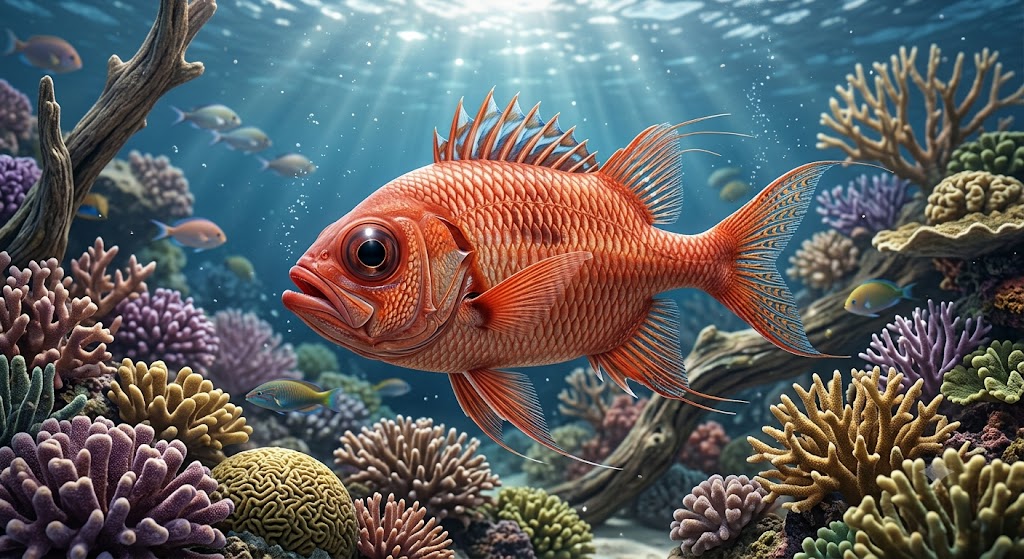
NAME : Longspine Squirrelfish
NAME OF THE SPECIE: Longspine Squirrelfish
LOCATION : Western Atlantic Ocean, including the Caribbean Sea, Gulf of Mexico, Bahamas and areas along the southeastern United States and northern South America.
HABITAT: It is a reef-associated marine fish found around coral reefs, rocky structures, caves, crevices and reef overhangs. It usually shelters in protected reef structures during daylight and becomes more active after dark.
HABITAT (15-20 words): Lives around coral reefs, rocky structures, caves and crevices, using protected reef areas for daytime shelter.
WEIGHT: Typical size: approximately 15–25 cm total length.
DIET: Small crustaceans Shrimp Small crabs Small fishes Other small reef invertebrates
FOOD: Longspine Squirrelfish is a carnivorous nocturnal predator. It becomes more active after sunset and searches around reef surfaces and crevices for small crustaceans and other small marine animals.
FOOD & DIET: A nocturnal carnivore feeding mainly on shrimp, small crustaceans, small fishes and other reef-associated invertebrates.
FACT: It belongs to the Holocentridae family. It is a true squirrelfish species, rather than merely a general group name. It is primarily active at night. During daylight, it often hides inside reef caves, holes and crevices. Its large eyes are adapted for low-light conditions. Its body generally has a reddish coloration with contrasting markings. The species has prominent spines on its fins, which can provide protection against predators. It has a relatively large head and eyes compared with many reef fishes. It uses reef structures as both shelter and feeding habitat. It feeds primarily on small animal prey rather than algae or plant material.
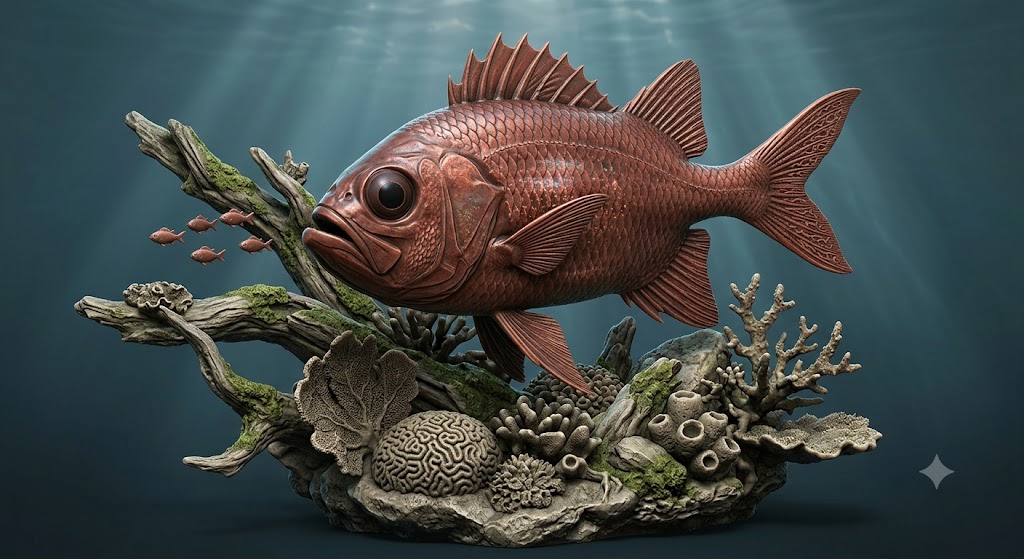
NAME : Bigscale Soldierfish
NAME OF THE SPECIE: Bigscale Soldierfish
LOCATION : Bigscale Soldierfish has a broad Indo-Pacific and Eastern Pacific distribution. It occurs from East Africa and southern Africa eastward across the Indian and Pacific Oceans, including areas around the Great Barrier Reef, Micronesia, Polynesia, Ryukyu Islands, Norfolk Island, Lord Howe Island, Clipperton, Cocos and Galápagos Islands. It is absent from the Red Sea.
HABITAT: It is a marine, reef-associated fish that commonly inhabits subtidal reef flats, channels, reef margins, caves, ledges and outer reef slopes. During daylight it generally hides in caves or underneath reef ledges and becomes more active at night. Its recorded depth range is approximately 0–159 m, although it is usually encountered much shallower, around 3–15 m.
HABITAT (15-20 words): Lives around coral reefs, reef caves, channels, ledges and outer reef slopes, hiding during daylight hours.
WEIGHT: Common length: approximately 22 cm total length. Maximum recorded length: approximately 30 cm total length
DIET: Plankton Crab larvae Other small planktonic crustaceans Small zooplankton FishBase specifically reports that it feeds mainly on plankton such as crab larvae.
FOOD: Bigscale Soldierfish is primarily a planktivorous predator. It feeds mainly in the water column on small planktonic organisms, particularly crab larvae and other small crustaceans. Its feeding activity is strongly associated with nighttime, when the fish is commonly encountered outside its daytime shelter.
FOOD & DIET: A nocturnal planktivore feeding mainly on crab larvae, small crustaceans and other planktonic organisms around reefs.
FACT: Bigscale Soldierfish belongs to the Holocentridae family, which includes soldierfish and squirrelfish.Its scientific name is Myripristis berndti. It can reach approximately 30 cm in total length.Its common recorded length is around 22 cm. Its scales have silvery-pink to pale-yellow centers with red edges, giving the fish a distinctive appearance. The outer portion of its spiny dorsal fin can be yellow to orange-yellow. The lower portions of several fins are red, while their leading edges can be white.
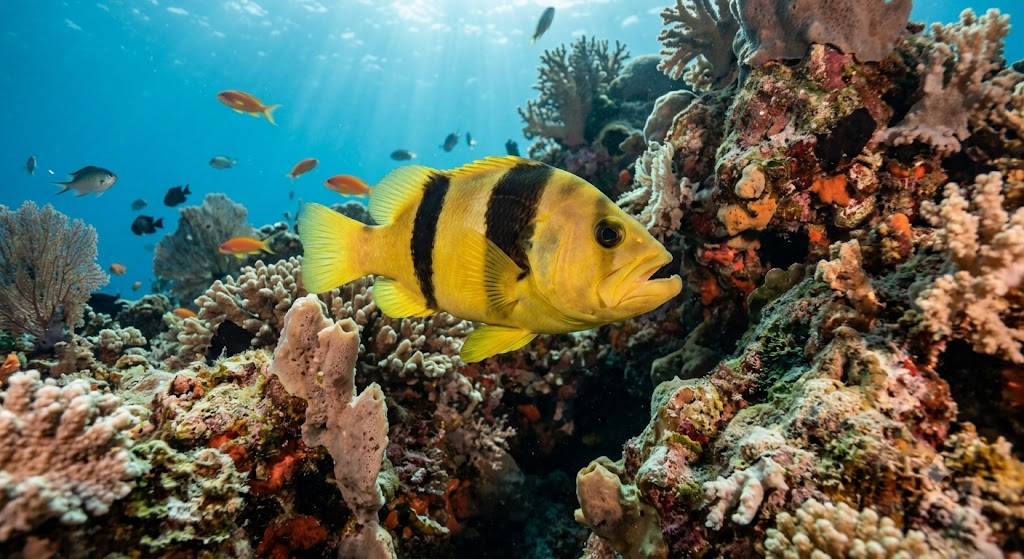
NAME : Barred Soapfish
NAME OF THE SPECIE: Barred Soapfish
LOCATION : Found in the Indo-West Pacific, from the Red Sea and East Africa eastward through the Indian Ocean and western Pacific, including areas around Indonesia, the Philippines, southern Japan, Papua New Guinea and northern Australia.
HABITAT: A marine reef-associated fish that lives around coral reefs, rocky reef areas, caves, crevices and sheltered reef structures. It is generally associated with relatively shallow reef environments but can occur at considerable depth.
HABITAT (15-20 words): Lives around coral reefs, rocky structures, caves and crevices, usually sheltering in protected reef habitats.
WEIGHT: Common size: approximately 15–20 cm total length.
DIET: Small fishes Small crustaceans Small reef invertebrates Other small marine animals
FOOD: Barred Soapfish is a carnivorous predator that feeds on small animal prey. It can ambush small fishes and invertebrates around reef structures. Like other soapfishes, it possesses specialized skin mucus that can serve as a chemical defense against predators.
FOOD & DIET: A carnivorous reef predator feeding on small fishes, crustaceans and other small marine animals.
FACT: It belongs to the family Grammistidae, the soapfishes. Its scientific name is Diploprion bifasciatum. The species is commonly called Barred Soapfish. It has a distinctive body pattern with dark vertical bars or bands contrasting against a lighter background. The barred pattern helps distinguish it from many other reef-associated soapfishes.
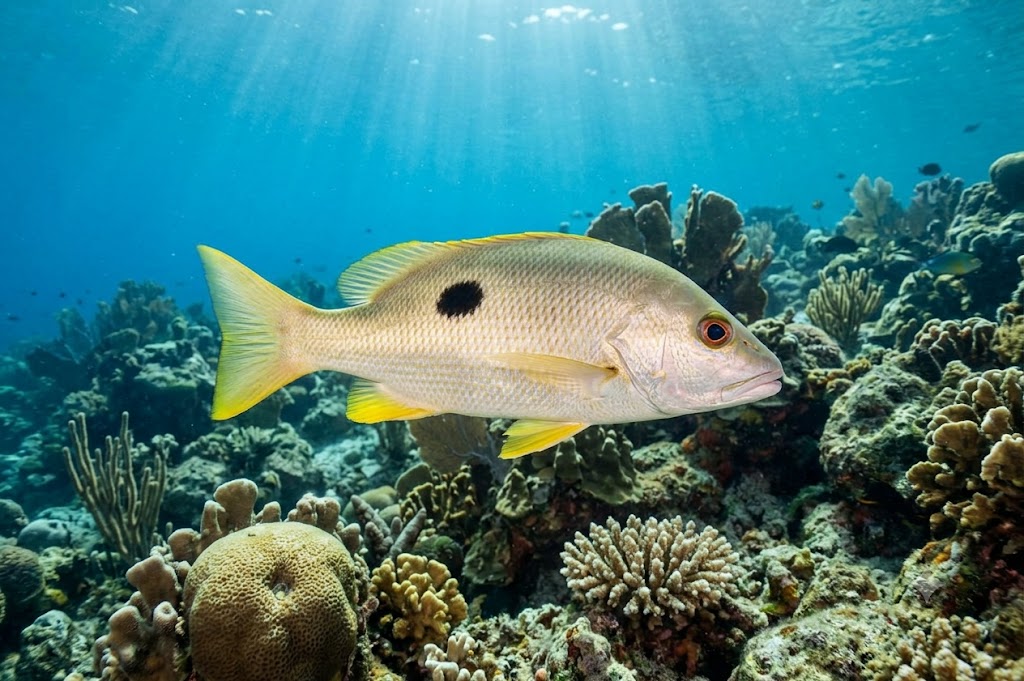
NAME : One-spot Snapper
NAME OF THE SPECIE: One-spot Snapper
LOCATION : The One-spot Snapper is distributed throughout the Indo-Pacific, from East Africa eastward to the Marquesas and Line Islands, north to the Ryukyu Islands and south to Australia.
HABITAT: It is a marine and reef-associated snapper that occurs from approximately 1–60 m depth. Adults are usually found around coral reefs, particularly near caves, large coral formations and wrecks that provide shelter. It may also tolerate brackish water in some areas.
HABITAT (15-20 words): Lives around coral reefs, caves, large coral formations and wrecks, usually remaining close to protective shelter.
WEIGHT: Common length: approximately 50 cm total length.
DIET: Small fishes Crabs Other benthic crustaceans Other small marine animals
FOOD: The One-spot Snapper is a carnivorous predator. Adults feed mainly on fishes and benthic crustaceans, especially crabs. Feeding occurs primarily at night, when the fish becomes more active around reef structures .
FOOD & DIET: A nocturnal carnivore feeding mainly on fishes, crabs and other benthic crustaceans around coral reef habitats.
FACT: It belongs to the Lutjanidae family, commonly known as the snapper family. Its scientific name is Lutjanus monostigma. Its common name, One-spot Snapper, refers to its characteristic dark spot. The species generally has a whitish to pinkish body with dusky scale margins.
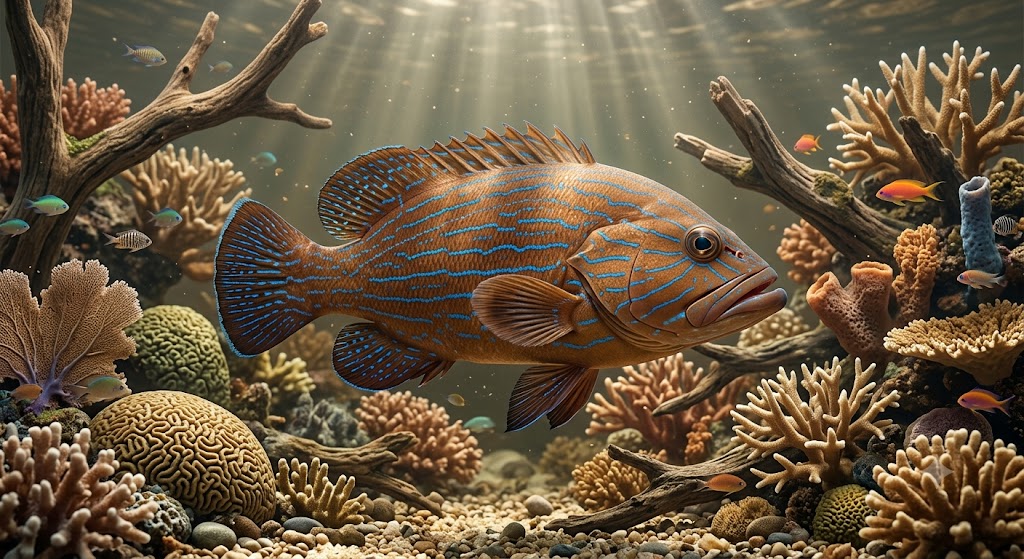
NAME : Blueline Grouper
NAME OF THE SPECIE: Blueline Grouper
LOCATION : Found in the Indo-West Pacific, from western India to the Philippines, north to southern Japan (Honshu) and south to northern Australia. Some historical records from Madagascar, Réunion and Mauritius are considered likely misidentifications.
HABITAT: A tropical marine, reef-associated and non-migratory grouper. It generally prefers shallow dead or silty reefs, especially reef areas that provide shelter. The recorded depth range is 1–30 m, with the species usually found at 1–15 m. It is generally solitary.
HABITAT (15-20 words): Lives on shallow dead or silty reefs, using reef structures for shelter and hunting, usually alone.
WEIGHT: Maximum recorded length: approximately 34 cm total length.
DIET: Small fishes Crustaceans Other small reef animals
FOOD: Blueline Grouper is a carnivorous reef predator. It feeds on small fishes and crustaceans, using its grouper body shape and mouth to capture animal prey around reef structures.
FOOD & DIET: A carnivorous reef predator that feeds mainly on small fishes, crustaceans and other small marine animals.
FACT: It belongs to the grouper family, Epinephelidae. Its scientific name is Cephalopholis formosa. The species was originally described by George Shaw in 1812. It has a relatively compact, fusiform/normal body shape with an oval cross-section.
વૈજ્ઞાનિક નામ : Holocentrus rufus
જાતિનું નામ: Longspine Squirrelfish
સ્થાન: આ મુખ્યત્વે Western Atlantic Oceanમાં જોવા મળે છે, જેમાં Caribbean Sea, Gulf of Mexico, Bahamas, southeastern United States અને northern South Americaના વિસ્તારોનો સમાવેશ થાય છે.
લંબાઈ અને વજન: સામાન્ય કદ: આશરે 15–25 સેમી કુલ લંબાઈ.
ખોરાક: Longspine Squirrelfish એક માંસાહારી nocturnal predator છે. તે સૂર્યાસ્ત પછી વધુ સક્રિય બને છે અને reef surface તથા crevicesની આસપાસ નાના crustaceans અને અન્ય નાના દરિયાઈ જીવોનો શિકાર કરે છે.
ખોરાક (વૈકલ્પિક) આહાર : તે રાત્રે સક્રિય માંસાહારી છે, જે મુખ્યત્વે ઝીંગા, નાના crustaceans, નાની માછલીઓ અને reef invertebrates ખાય છે.
વિશેષતા: તે Holocentridae કુટુંબની છે. આ એક વાસ્તવિક Squirrelfish species છે. તે મુખ્યત્વે રાત્રે સક્રિય હોય છે. દિવસ દરમિયાન તે reef caves, holes અને crevicesમાં છુપાય છે. તેની મોટી આંખો ઓછા પ્રકાશમાં જોવા માટે અનુકૂળ છે. તેના શરીર પર સામાન્ય રીતે લાલ રંગ અને contrasting markings જોવા મળે છે. તેના fins પર મજબૂત spines હોય છે, જે predatorsથી રક્ષણમાં મદદ કરી શકે છે. તેનું માથું અને આંખો ઘણી reef fishesની તુલનામાં પ્રમાણમાં મોટા હોય છે. તે reef structuresનો ઉપયોગ આશ્રય અને ખોરાક બંને માટે કરે છે. તે મુખ્યત્વે નાના પ્રાણીઓ ખાય છે, algae અથવા છોડ નહીં. Holocentridaeની અન્ય માછલીઓની જેમ તે low-frequency sounds ઉત્પન્ન કરી શકે છે. આ soundsનો ઉપયોગ communication અને social interactions માટે થઈ શકે છે. તેનું nocturnal feeding reef ecosystemમાં નાના જીવોની populationsને અસર કરે છે. તે ક્યારેક marine aquarium tradeમાં પણ જોવા મળે છે.
વૈજ્ઞાનિક નામ : Myripristis berndti
જાતિનું નામ: Bigscale Soldierfish
સ્થાન: આ Indo-Pacific અને Eastern Pacific વિસ્તારમાં વ્યાપક રીતે જોવા મળે છે. તેનું વિતરણ East Africa અને southern Africaથી Indian અને Pacific Oceans સુધી છે. તે Great Barrier Reef, Micronesia, Polynesia, Ryukyu Islands, Norfolk Island, Lord Howe Island, Clipperton, Cocos અને Galápagos Islandsની આસપાસ પણ જોવા મળે છે. તે Red Seaમાં જોવા મળતી નથી.
લંબાઈ અને વજન: સામાન્ય લંબાઈ: આશરે 22 સેમી કુલ લંબાઈ.
ખોરાક: Bigscale Soldierfish મુખ્યત્વે planktivorous predator છે. તે પાણીમાં તરતા નાના જીવો, ખાસ કરીને crab larvae અને નાના crustaceans, ખાય છે.
ખોરાક (વૈકલ્પિક) આહાર : તે રાત્રે સક્રિય planktivore છે, જે મુખ્યત્વે crab larvae, નાના crustaceans અને અન્ય planktonic જીવો ખાય છે.
વિશેષતા: તે Holocentridae કુટુંબની છે, જેમાં soldierfish અને squirrelfishનો સમાવેશ થાય છે. F FishBase તેનું વૈજ્ઞાનિક નામ Myripristis berndti છે. તે આશરે 30 સેમી સુધી લાંબી થઈ શકે છેતેના scalesનો મધ્ય ભાગ silvery-pinkથી pale yellow અને કિનારીઓ લાલ હોય છે.તેના spiny dorsal finનો બહારનો ભાગ પીળાથી orange-yellow હોઈ શકે છે. તેના ઘણા finsના નીચેના ભાગ લાલ હોય છે અને આગળની કિનારીઓ સફેદ હોઈ શકે છે.
વૈજ્ઞાનિક નામ : Diploprion bifasciatum
જાતિનું નામ: Barred Soapfish
સ્થાન: આ Indo-West Pacific વિસ્તારમાં જોવા મળે છે. તેનું વિતરણ Red Sea અને East Africaથી Indian Ocean મારફતે western Pacific સુધી છે. તે Indonesia, Philippines, southern Japan, Papua New Guinea અને northern Australiaની આસપાસ પણ જોવા મળે છે.
લંબાઈ અને વજન: સામાન્ય કદ: આશરે 15–20 સેમી કુલ લંબાઈ.
ખોરાક: Barred Soapfish એક માંસાહારી predator છે. તે reef structuresની આસપાસ નાની માછલીઓ અને નાના invertebratesનો શિકાર કરે છે. અન્ય soapfishesની જેમ તેની ત્વચા ખાસ પ્રકારનું mucus ઉત્પન્ન કરે છે, જે predators સામે chemical defense તરીકે મદદ કરી શકે છે.
ખોરાક (વૈકલ્પિક) આહાર : તે માંસાહારી reef predator છે, જે નાની માછલીઓ, crustaceans અને અન્ય નાના દરિયાઈ જીવો ખાય છે.
વિશેષતા: તે Grammistidae કુટુંબની છે, જેને soapfishesનું કુટુંબ કહેવામાં આવે છે. તેનું વૈજ્ઞાનિક નામ Diploprion bifasciatum છે. તેનું સામાન્ય નામ Barred Soapfish છે. તેના શરીર પર હળવા રંગની પૃષ્ઠભૂમિ પર ઘેરા vertical bars અથવા bands જોવા મળે છે. આ barred pattern તેની ઓળખ માટે મહત્વપૂર્ણ છે. અન્ય soapfishesની જેમ તે પોતાની ત્વચામાંથી mucus ઉત્પન્ન કરી શકે છે. Soapfish mucusમાં grammistins નામના biologically active substances હોય છે.
વૈજ્ઞાનિક નામ : Lutjanus monostigma
જાતિનું નામ: One-spot Snapper
સ્થાન: One-spot Snapper Indo-Pacific વિસ્તારમાં જોવા મળે છે. તેનું વિતરણ East Africaથી Marquesas અને Line Islands સુધી, ઉત્તર તરફ Ryukyu Islands અને દક્ષિણ તરફ Australia સુધી છે.
લંબાઈ અને વજન: સામાન્ય લંબાઈ: આશરે 50 સેમી કુલ લંબાઈ.
ખોરાક: One-spot Snapper એક માંસાહારી predator છે. પુખ્ત માછલીઓ મુખ્યત્વે માછલીઓ અને benthic crustaceans, ખાસ કરીને કરચલા, ખાય છે. તે મુખ્યત્વે રાત્રે ખોરાક લે છે.
ખોરાક (વૈકલ્પિક) આહાર : તે રાત્રે સક્રિય માંસાહારી છે, જે મુખ્યત્વે માછલીઓ, કરચલા અને અન્ય benthic crustaceans ખાય છે.
વિશેષતા: તેનું સામાન્ય નામ One-spot Snapper તેના વિશિષ્ટ dark spot પરથી આવ્યું છે. તેની ઉપરની પીઠ અને માથાનો ઉપરનો ભાગ grey અથવા brown દેખાઈ શકે છે. કેટલાક પુખ્ત specimensમાં આ spot ખૂબ ઝાંખો અથવા ગેરહાજર હોઈ શકે છે. તેની પીઠ પર soft dorsal finના આગળના ભાગની નીચે એક કાળો spot હોય છે. તેના fins સામાન્ય રીતે પીળા રંગના હોય છે. તે ઘણીવાર ગુફાઓ, મોટા coral formations અને wreckage પાસે રહે છે.
વૈજ્ઞાનિક નામ : Cephalopholis formosa
જાતિનું નામ: Blueline Grouper
સ્થાન: આ Indo-West Pacific વિસ્તારમાં જોવા મળે છે. તેનું વિતરણ western Indiaથી Philippines, ઉત્તર તરફ southern Japan (Honshu) અને દક્ષિણ તરફ northern Australia સુધી છે.
લંબાઈ અને વજન: મહત્તમ નોંધાયેલી લંબાઈ: આશરે 34 સેમી કુલ લંબાઈ.
ખોરાક: Blueline Grouper એક માંસાહારી reef predator છે. તે મુખ્યત્વે નાની માછલીઓ અને crustaceans ખાય છે અને reef structuresની આસપાસ નાના જીવોનો શિકાર કરે છે.
ખોરાક (વૈકલ્પિક) આહાર : તે માંસાહારી reef predator છે, જે મુખ્યત્વે નાની માછલીઓ, crustaceans અને અન્ય નાના દરિયાઈ જીવો ખાય છે.
વિશેષતા: તે Epinephelidae (Grouper) કુટુંબની છે. તેનું વૈજ્ઞાનિક નામ Cephalopholis formosa છે. તેનું વર્ણન પ્રથમ વખત George Shaw દ્વારા 1812માં કરવામાં આવ્યું હતું. તેને Bluelined Hind પણ કહેવામાં આવે છે. તેનું શરીર સામાન્ય રીતે ઘેરા ભૂરાથી પીળાશ પડતા ભૂરા રંગનું હોય છે અને તેના પર પાતળી વાદળી પટ્ટીઓ હોય છે.
वैज्ञानिक नाम : Holocentrus rufus
जाति का नाम : Longspine Squirrelfish
जगह: यह मुख्य रूप से Western Atlantic Ocean में पाई जाती है, जिसमें Caribbean Sea, Gulf of Mexico, Bahamas, southeastern United States और northern South America के क्षेत्र शामिल हैं।
लंबाई और वजन: सामान्य आकार: लगभग 15–25 सेमी कुल लंबाई।
खाना: Longspine Squirrelfish एक मांसाहारी nocturnal predator है। यह सूर्यास्त के बाद अधिक सक्रिय होती है और reef surface तथा crevices के आसपास छोटे crustaceans और अन्य छोटे समुद्री जीवों का शिकार करती है।
भोजन (वैकल्पिक) आहार: यह रात में सक्रिय मांसाहारी है, जो मुख्यतः झींगे, छोटे crustaceans, छोटी मछलियाँ और reef invertebrates खाती है।
विशेषता: यह Holocentridae परिवार से संबंधित है। यह एक वास्तविक Squirrelfish species है। यह मुख्य रूप से रात में सक्रिय होती है। दिन में यह अक्सर reef caves, holes और crevices में छिपती है। इसकी बड़ी आँखें कम रोशनी में देखने के लिए अनुकूलित हैं। इसके शरीर पर सामान्यतः लाल रंग और contrasting markings दिखाई देते हैं। इसके fins पर मजबूत spines होते हैं, जो predators से सुरक्षा में मदद कर सकते हैं। इसका सिर और आँखें कई reef fishes की तुलना में अपेक्षाकृत बड़ी होती हैं। यह reef structures को आश्रय और भोजन दोनों के लिए इस्तेमाल करती है। यह मुख्यतः छोटे जीव-जंतुओं को खाती है, algae या पौधों को नहीं। Holocentridae परिवार की अन्य मछलियों की तरह यह कम आवृत्ति वाली ध्वनियाँ उत्पन्न कर सकती है।
वैज्ञानिक नाम : Myripristis berndti
जाति का नाम : Bigscale Soldierfish
जगह: यह Indo-Pacific और Eastern Pacific क्षेत्रों में व्यापक रूप से पाई जाती है। इसका क्षेत्र East Africa और southern Africa से लेकर Indian और Pacific Oceans तक फैला है। यह Great Barrier Reef, Micronesia, Polynesia, Ryukyu Islands, Norfolk Island, Lord Howe Island, Clipperton, Cocos और Galápagos Islands के आसपास भी पाई जाती है। यह Red Sea में नहीं पाई जाती।
लंबाई और वजन: सामान्य लंबाई: लगभग 22 सेमी कुल लंबाई।
खाना: Bigscale Soldierfish मुख्य रूप से planktivorous predator है। यह पानी में तैरने वाले छोटे जीवों, विशेष रूप से crab larvae और छोटे crustaceans, को खाती है।
भोजन (वैकल्पिक) आहार: यह रात में सक्रिय planktivore है, जो मुख्यतः crab larvae, छोटे crustaceans और अन्य planktonic जीव खाती है।
विशेषता: इसका वैज्ञानिक नाम Myripristis berndti है। यह लगभग 30 सेमी तक लंबी हो सकती है।इसके scales के बीच का भाग silvery-pink से pale yellow और किनारे लाल होते हैं। इसके spiny dorsal fin का बाहरी हिस्सा पीला से orange-yellow हो सकता है। इसके कई fins के निचले हिस्से लाल होते हैं और उनके अग्र किनारे सफेद हो सकते हैं।
वैज्ञानिक नाम : Diploprion bifasciatum
जाति का नाम : Barred Soapfish
जगह: यह Indo-West Pacific क्षेत्र में पाई जाती है। इसका वितरण Red Sea और East Africa से Indian Ocean होते हुए western Pacific तक फैला है। यह Indonesia, Philippines, southern Japan, Papua New Guinea और northern Australia के आसपास भी पाई जाती है।
लंबाई और वजन: सामान्य आकार: लगभग 15–20 सेमी कुल लंबाई।
खाना: Barred Soapfish एक मांसाहारी predator है। यह reef structures के आसपास छोटी मछलियों और छोटे invertebrates का शिकार करती है। अन्य soapfishes की तरह इसके शरीर की त्वचा विशेष mucus बनाती है, जो predators से रासायनिक सुरक्षा में सहायता कर सकता है।
भोजन (वैकल्पिक) आहार: यह मांसाहारी reef predator है, जो छोटी मछलियाँ, crustaceans और अन्य छोटे समुद्री जीव खाती है।
विशेषता: यह Grammistidae परिवार से संबंधित है, जिसे soapfishes का परिवार कहा जाता है। इसका वैज्ञानिक नाम Diploprion bifasciatum है। इसका सामान्य नाम Barred Soapfish है। इसके शरीर पर हल्के रंग की पृष्ठभूमि के ऊपर गहरे vertical bars या bands होते हैं। यह barred pattern इसकी पहचान में महत्वपूर्ण है। अन्य soapfishes की तरह यह अपनी त्वचा से mucus बना सकती है। Soapfish mucus में grammistins नामक biologically active substances पाए जाते हैं। ये substances अन्य मछलियों के लिए toxic हो सकते हैं और predators को रोकने में मदद कर सकते हैं।
वैज्ञानिक नाम : Lutjanus monostigma
जाति का नाम : One-spot Snapper
जगह: One-spot Snapper Indo-Pacific क्षेत्र में पाई जाती है। इसका वितरण East Africa से Marquesas और Line Islands तक, उत्तर में Ryukyu Islands और दक्षिण में Australia तक है।
लंबाई और वजन: सामान्य लंबाई: लगभग 50 सेमी कुल लंबाई।
खाना: One-spot Snapper एक मांसाहारी predator है। वयस्क मुख्य रूप से मछलियाँ और benthic crustaceans, विशेषकर केकड़े, खाते हैं। यह मुख्यतः रात में भोजन करती है।
भोजन (वैकल्पिक) आहार: यह रात में सक्रिय मांसाहारी है, जो मुख्यतः मछलियाँ, केकड़े और अन्य benthic crustaceans खाती है।
विशेषता: इसका सामान्य नाम One-spot Snapper इसके विशिष्ट dark spot से संबंधित है। इसकी ऊपरी पीठ और सिर का ऊपरी हिस्सा grey या brown दिखाई दे सकता है। कुछ वयस्क मछलियों में यह spot बहुत हल्का या लगभग गायब हो सकता है। Juveniles में यह spot अधिक गोल होता है और बढ़ने के साथ इसका आकार बदलता है। इसके fins सामान्यतः पीले रंग के होते हैं।
वैज्ञानिक नाम : Cephalopholis formosa
जाति का नाम : Blueline Grouper
जगह: यह Indo-West Pacific में पाई जाती है। इसका वितरण western India से Philippines, उत्तर में southern Japan (Honshu) और दक्षिण में northern Australia तक है।
लंबाई और वजन: अधिकतम दर्ज लंबाई: लगभग 34 सेमी कुल लंबाई।
खाना: Blueline Grouper एक मांसाहारी reef predator है। यह मुख्य रूप से छोटी मछलियाँ और crustaceans खाती है और reef structures के आसपास छोटे जीवों का शिकार करती है।
भोजन (वैकल्पिक) आहार: यह मांसाहारी reef predator है, जो मुख्यतः छोटी मछलियाँ, crustaceans और अन्य छोटे समुद्री जीव खाती है।
विशेषता: यह Epinephelidae (Grouper) परिवार से संबंधित है। इसका वैज्ञानिक नाम Cephalopholis formosa है। इसका वर्णन पहली बार George Shaw ने 1812 में किया था। इसे Bluelined Hind भी कहा जाता है। इसका शरीर सामान्यतः गहरे भूरे से पीले-भूरे रंग का होता है और इस पर पतली नीली धारियाँ होती हैं।