


x





Americas Zone
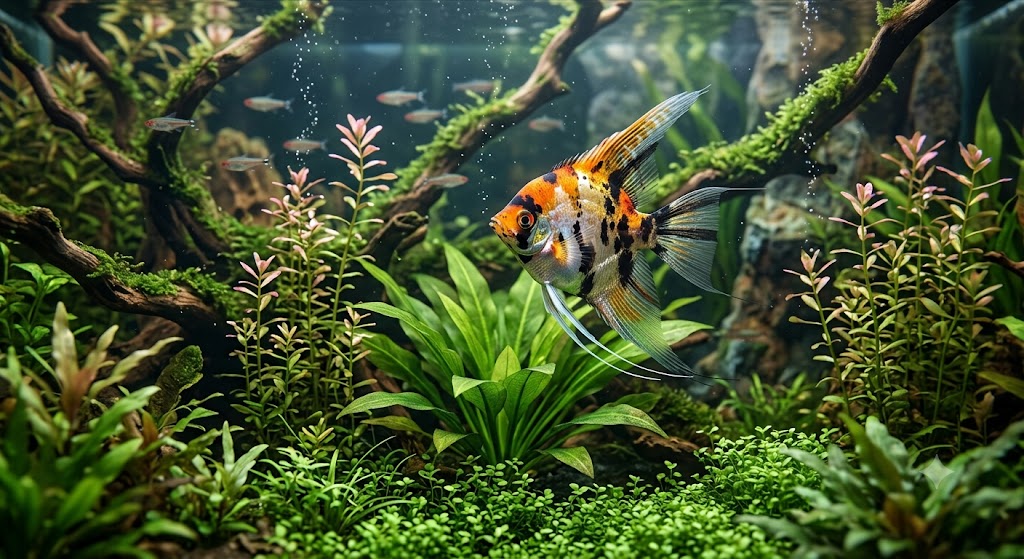
NAME : Koi Angelfish
NAME OF THE SPECIE: Koi Angelfish
LOCATION : The wild species Pterophyllum scalare is native to South America, particularly the Amazon River basin, including parts of Peru, Colombia and Brazil. It is also recorded from rivers in Amapá, the Oyapock River region of French Guiana and the Essequibo River in Guyana. Koi Angelfish itself is an aquarium-bred ornamental variety, rather than a wild geographic population.
HABITAT: In the wild, Pterophyllum scalare inhabits freshwater swamps, flooded areas and slow-moving waters with dense aquatic and riverside vegetation. The water may be clear or silty.
HABITAT (15-20 words): Lives in tropical freshwater swamps and flooded areas with dense aquatic vegetation and relatively calm, slow-moving water.
WEIGHT: Maximum recorded length: about 15 cm total length in FishBase's biology record. FishBase also lists a specimen maximum of about 10.5 cm and a maximum published weight of approximately 25 g in its size database.
DIET: Small aquatic and terrestrial invertebrates, insect larvae and other small animal prey; aquarium angelfish are commonly fed high-quality flakes, pellets and frozen/live foods.
FOOD: Pterophyllum scalare is primarily an animal-eating (carnivorous/insectivorous) freshwater fish. Its natural feeding ecology includes small animal prey and aquatic invertebrates.
FOOD & DIET: Feeds mainly on small aquatic animals and invertebrates, using its laterally compressed body to move efficiently among vegetation.
FACT: Koi Angelfish is named for its koi-like orange, white and black coloration. The underlying species, Pterophyllum scalare, has a laterally compressed, disc-shaped body with very tall dorsal and anal fins. It is a member of the cichlid family (Cichlidae). In breeding, the male and female can guard their eggs together after eggs are attached to aquatic vegetation or another suitable surface. It is one of the most popular tropical aquarium fishes.
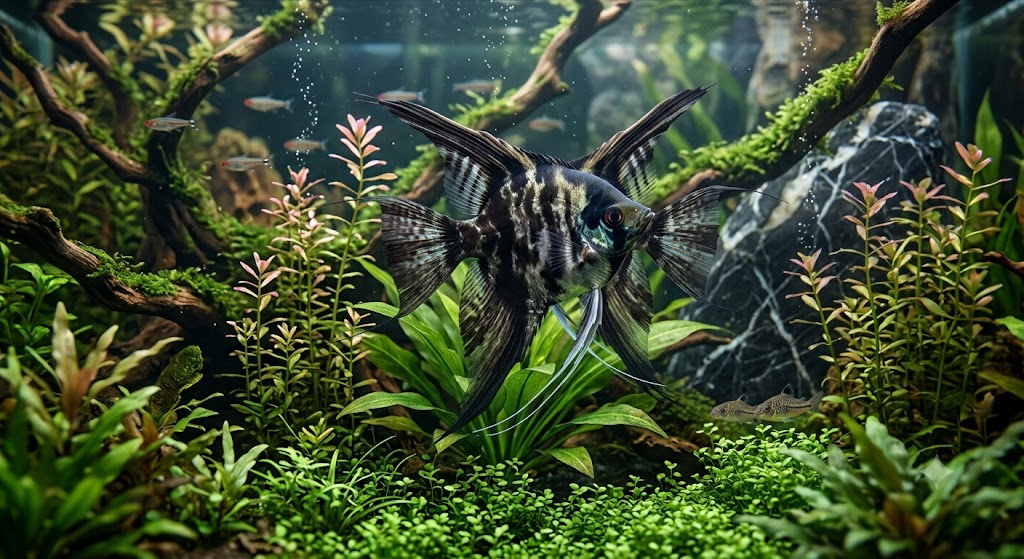
NAME : Black Marble Angelfish
NAME OF THE SPECIE: Black Marble Angelfish
LOCATION : The wild species Pterophyllum scalare is native to South America, especially the Amazon River basin of Peru, Colombia and Brazil. It is also recorded from rivers in Amapá, Brazil, the Oyapock River in French Guiana and the Essequibo River in Guyana. The Black Marble form is primarily an aquarium-bred ornamental variety, so its black-marble color pattern is not a separate wild geographic population.
HABITAT: In the wild, Pterophyllum scalare inhabits freshwater swamps and flooded areas with dense aquatic and riverbank vegetation. The water can be clear or silty. FishBase classifies it as a tropical freshwater, benthopelagic and non-migratory species.
HABITAT (15-20 words): Lives in tropical freshwater swamps and flooded areas with dense aquatic vegetation and relatively calm water.
WEIGHT: Up to about 15 cm; maximum published weight about 25 g.
DIET: Small aquatic animals, aquatic invertebrates, insect larvae and other small animal prey.
FOOD: Primarily animal-based. The species feeds on small aquatic animals and invertebrates. FishBase classifies its feeding as mainly animal-based and gives a trophic level estimate of about 3.6.
FOOD & DIET: Feeds mainly on small aquatic animals and invertebrates, searching among vegetation for suitable prey.
FACT: Black Marble Angelfish is an ornamental color variety, not a separate biological species. The underlying species, Pterophyllum scalare, belongs to the cichlid family (Cichlidae).Its body is strongly compressed and disc-shaped, with tall dorsal and anal fins. Wild angelfelfish live among dense aquatic vegetation, where their tall body and fins are well suited to maneuvering through plants. During breeding, both male and female can guard the eggs, which are attached to aquatic vegetation or another suitable surface. The species is one of the most popular tropical aquarium fishes.
વૈજ્ઞાનિક નામ : Pterophyllum scalare
જાતિનું નામ: કોઈ એન્જલફિશ
સ્થાન: જંગલી Pterophyllum scalare દક્ષિણ અમેરિકાની મૂળ પ્રજાતિ છે. તે મુખ્યત્વે એમેઝોન નદીના બેસિનમાં જોવા મળે છે, જેમાં પેરુ, કોલંબિયા અને બ્રાઝિલના વિસ્તારોનો સમાવેશ થાય છે. બ્રાઝિલના અમાપા વિસ્તાર, ફ્રેન્ચ ગુઆનાના ઓયાપોક નદી વિસ્તાર અને ગુયાનાની એસ્કિબો નદીમાંથી પણ તેની નોંધ છે. કોઈ એન્જલફિશ મુખ્યત્વે એક્વેરિયમમાં ઉછેરવામાં આવતી સજાવટી જાત છે.
લંબાઈ અને વજન: મહત્તમ નોંધાયેલી લંબાઈ: આશરે 15 સેમી.
ખોરાક: Pterophyllum scalare મુખ્યત્વે નાના જળચર પ્રાણીઓ અને અકશેરુકી પ્રાણીઓ ખાનારી મીઠા પાણીની માછલી છે.
ખોરાક (વૈકલ્પિક) આહાર : તે મુખ્યત્વે નાના જળચર પ્રાણીઓ અને અકશેરુકી પ્રાણીઓ ખાય છે તથા વનસ્પતિ વચ્ચે સરળતાથી શિકાર કરે છે.
વિશેષતા: તેનું નામ કોઈ કાર્પ જેવી નારંગી, સફેદ અને કાળી રંગત પરથી પડ્યું છે. Pterophyllum scalare નું શરીર ચપટું અને ડિસ્ક જેવું હોય છે અને તેના ડોર્સલ તથા એનાલ ફિન્સ ખૂબ ઊંચા હોય છે. તે **સિચ્લિડ પરિવાર (Cichlidae)**ની માછલી છે. પ્રજનન દરમિયાન નર અને માદા બંને ઈંડાંની રક્ષા કરી શકે છે. તે લોકપ્રિય ઉષ્ણકટિબંધીય એક્વેરિયમ માછલીઓમાંની એક છે.
વૈજ્ઞાનિક નામ : Pterophyllum scalare
જાતિનું નામ: બ્લેક માર્બલ એન્જલફિશ
સ્થાન: જંગલી Pterophyllum scalare દક્ષિણ અમેરિકાની મૂળ પ્રજાતિ છે અને મુખ્યત્વે એમેઝોન નદીના બેસિનમાં જોવા મળે છે, ખાસ કરીને પેરુ, કોલંબિયા અને બ્રાઝિલમાં. બ્રાઝિલના અમાપા વિસ્તાર, ફ્રેન્ચ ગુઆનાની ઓયાપોક નદી અને ગુયાનાની એસ્કિબો નદીમાં પણ તેની નોંધ છે. બ્લેક માર્બલ સ્વરૂપ મુખ્યત્વે એક્વેરિયમમાં ઉછેરવામાં આવતી સજાવટી જાત છે.
લંબાઈ અને વજન: આશરે 15 સેમી સુધી; મહત્તમ પ્રકાશિત વજન આશરે 25 ગ્રામ.
ખોરાક: તેનો આહાર મુખ્યત્વે પ્રાણી આધારિત હોય છે. તે નાના જળચર પ્રાણીઓ અને અકશેરુકી પ્રાણીઓ ખાય છે.
ખોરાક (વૈકલ્પિક) આહાર : તે મુખ્યત્વે નાના જળચર પ્રાણીઓ અને અકશેરુકી પ્રાણીઓ ખાય છે તથા વનસ્પતિ વચ્ચે ખોરાક શોધે છે.
વિશેષતા: બ્લેક માર્બલ એન્જલફિશ એક સજાવટી રંગીન જાત છે, અલગ વૈજ્ઞાનિક પ્રજાતિ નથી. તેની મૂળ પ્રજાતિ Pterophyllum scalare **સિચ્લિડ પરિવાર (Cichlidae)**ની છે. F FishBase તેનું શરીર ચપટું અને ડિસ્ક જેવું હોય છે અને તેના ડોર્સલ તથા એનાલ ફિન્સ ખૂબ ઊંચા હોય છે.જંગલી પરિસ્થિતિમાં તે ગીચ જળચર વનસ્પતિ વચ્ચે રહે છે. પ્રજનન દરમિયાન નર અને માદા બંને ઈંડાંની રક્ષા કરી શકે છે
वैज्ञानिक नाम : Pterophyllum scalare
जाति का नाम : कोई एंजेलफिश
जगह: जंगली Pterophyllum scalare दक्षिण अमेरिका की मूल प्रजाति है। यह मुख्य रूप से अमेज़न नदी बेसिन में पाई जाती है, जिसमें पेरू, कोलंबिया और ब्राज़ील के क्षेत्र शामिल हैं। यह ब्राज़ील के अमापा क्षेत्र, फ्रेंच गयाना के ओयापॉक नदी क्षेत्र और गुयाना की एसेकिबो नदी में भी दर्ज की गई है। कोई एंजेलफिश मुख्यतः एक्वेरियम में पाली जाने वाली सजावटी किस्म है।
लंबाई और वजन: अधिकतम दर्ज लंबाई: लगभग 15 सेमी।
खाना: Pterophyllum scalare मुख्य रूप से छोटे जलीय जीवों और अकशेरुकियों को खाने वाली मीठे पानी की मछली है।
भोजन (वैकल्पिक) आहार: यह मुख्यतः छोटे जलीय जीव और अकशेरुकी खाती है तथा वनस्पतियों के बीच आसानी से शिकार करती है।
विशेषता: इसका नाम कोई कार्प जैसी नारंगी, सफेद और काली रंगत के कारण रखा गया है। Pterophyllum scalare का शरीर चपटा और डिस्क जैसा होता है तथा इसके पृष्ठीय और गुदा पंख बहुत ऊँचे होते हैं। यह सिक्लिड परिवार (Cichlidae) की मछली है। प्रजनन के दौरान नर और मादा दोनों अंडों की रक्षा कर सकते हैं। यह दुनिया की लोकप्रिय उष्णकटिबंधीय एक्वेरियम मछलियों में से एक है।
वैज्ञानिक नाम : Pterophyllum scalare
जाति का नाम : ब्लैक मार्बल एंजेलफिश
जगह: जंगली Pterophyllum scalare दक्षिण अमेरिका की मूल प्रजाति है और मुख्य रूप से अमेज़न नदी बेसिन में पाई जाती है, विशेष रूप से पेरू, कोलंबिया और ब्राज़ील में। यह ब्राज़ील के अमापा क्षेत्र, फ्रेंच गयाना की ओयापॉक नदी और गुयाना की एसेकिबो नदी में भी दर्ज की गई है। ब्लैक मार्बल रूप मुख्यतः एक्वेरियम में विकसित सजावटी किस्म है।
लंबाई और वजन: लगभग 15 सेमी तक; अधिकतम प्रकाशित वजन लगभग 25 ग्राम।
खाना: इसका आहार मुख्य रूप से जंतु-आधारित होता है। यह छोटे जलीय जीवों और अकशेरुकी प्राणियों को खाती है।
भोजन (वैकल्पिक) आहार: यह मुख्यतः छोटे जलीय जीव और अकशेरुकी खाती है तथा वनस्पतियों के बीच भोजन खोजती है।
विशेषता: ब्लैक मार्बल एंजेलफिश एक सजावटी रंगीन किस्म है, अलग वैज्ञानिक प्रजाति नहीं। इसकी मूल प्रजाति Pterophyllum scalare सिक्लिड परिवार (Cichlidae) से संबंधित है। F FishBase इसका शरीर चपटा और डिस्क जैसा होता है तथा इसके पृष्ठीय और गुदा पंख बहुत ऊँचे होते हैं।जंगली अवस्था में यह घनी जलीय वनस्पतियों के बीच रहती है। प्रजनन के दौरान नर और मादा दोनों अंडों की रक्षा कर सकते हैं।